Monday, 16 December 2013
Preliminary Task

Monday, 9 December 2013
Log Line Ideas For Opening Sequence
Log lines must provide enigma (generating questions in the audiences mind), establish a main character and possibly location as well as the overall purpose/aim of the film/
'The Dark Knight of Gotham City begins his war on crime with his first major enemy being the clownishly homicidal Joker.'
For example the above presents the log line to 'Batman' (1989) in which main character, location and purpose of the films content is established. 'The Dark Knight' being Batman, 'Gotham City' establishment of location and 'his war on crime with his first major enemy' establishes the films purpose, the log line also presents the antagonist 'The Clownishly homicidal Joker'. With all of this in context as sense of enigma is created, why is 'The Dark Knight' at war with crime, what is the purpose of the antagonist etc.
Thursday, 28 November 2013
Preliminary Task
In groups of no more than four produce a continuity task involving filming and editing a character 'opening a door, crossing the room, sitting in a chair opposite another character with whom she/he exchanges a couple of lines of dialogue'.
This task must demonstrate -
This task must demonstrate -
- Match On Action
- Shot/Reverse Shot
- 180 Degree Rule
Film Ratings
All films published into the U.K must go through the process of a 'film rating' which is undertaken by the BBFC (British Board Of Film Classification). The BBFC is a non-governmental independent body which has published ratings on originally cinematic productions following into video and since the year of 1985 publishing ratings onto DVD's. The purpose behind the rating of films and the BBFC's core aim is to protect audience members of all ages creating barriers of protection for younger audiences against films with a high content of themes of a sexual nature, violence, drug abuse etc. It is also popularly used for parental guidance with responsible adults for children to consider the suitability and whether or not the allowance for the young person to view the media text or not.

The above presents the ratings the BBFC categorise films into, whereby the rating of 'U' meaning suitable for all ages through up to the rating of '18' meaning a film suitable only for ages including and above the age of eighteen. Films published in the UK by law will have their rating published on the front cover.

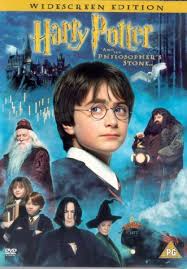

The above presents the ratings the BBFC categorise films into, whereby the rating of 'U' meaning suitable for all ages through up to the rating of '18' meaning a film suitable only for ages including and above the age of eighteen. Films published in the UK by law will have their rating published on the front cover.
Thursday, 7 November 2013
The Three Act Structure

Thursday, 17 October 2013
New Media
New Media is quite literally what it is named, new media developments and advances which have arguably played a dramatic influence on all aspects of modern day life. These new media advances such as the internet providing notable sites such as YouTube and social networking sites have now made it easier for everyone to broadcast themselves onto the internet and either lead to instant fame for all the right or all the wrong reasons or simply to broadcast themselves in whatever format and go unnoticed. In more simplistic terms new media often refers to 'on demand content' in which audiences can 'stream' content 'on demand' at any point of the day whenever and wherever it pleases. On-line formats such as BBC iPlayer, 4OD and 5 On Demand are all examples of these new media formats in which both pre recorded and live streaming content can be viewed. There are many positives to these technological advances as now viewing media texts is not simply rushing to the television to catch a show but simply 'catching up' when and where it is suitable for each audience members liking, making audience viewing flexible and fitting to each individual persons liking.

Monday, 7 October 2013
Audiences Continued
Mass Audience - the term 'mass audience' refers to those from within the entire audience of media texts whom consume mainstream/popular texts coming mainly from examples such as soap operas and sitcoms. Mass audiences include that of women, men, children and overall adults therefore a piece of media text that provides entertainment for all age groups. 'Friends' and 'Top Gear' are good examples of a programme with Mass audience.
Niche Audience - Niche audiences on the other hand focus on the opposite to a mass audience. There audience is more specific and aimed at that of a particular type of audience with a unique interest. Media Texts such as magazines write about stamp collection and bird watching are clear examples of media texts with a niche audience.
Audience Research -
Audience research is a key concept to any media texts production, research into the audience gives the producer of the media text a clear indication into the interests of the chosen target audience and thereby creating almost a template in which to structure there media text. Research comes in formats such as questionnaires, pre film screenings and focus groups. A lot of time and money is put into the practise of audience research as fundamentally it could be the reason for pure successes or failure of the piece.
http://www.thinkbox.tv/server/show/nav.914
The above link provides a clear in depth analysis as to how audiences are categorised.
Thursday, 3 October 2013
Audiences
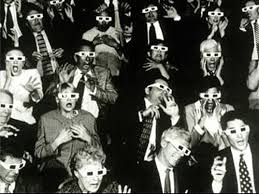
An audience is a group of people who view any form of media text. All professional pieces of text are created with audience in mind otherwise known as a 'target audience'. Audience is a key concept to producers when creating any form of media text as not only does it provide the core to the piece of media text but will ensure its success should the piece be targeted and appeal correctly to the audience.
Without an audience there would be no purpose behind any media text as the soul purpose of media text is for the viewer/audience to 'consume' in whatever form it may be and for whatever purpose, whether it be entertainment, educational or for other purposes. Without an audience not only would the media texts been of no means for purpose but would also result in no profit to the producers of the media text.

Uses And Gratifications -
Media theorist Katz and Blumler proposed a theory from in depth research that audiences watch forms of media text for a variety of key reasons.
1.) To inform themselves of current events, historical, political and social events and so forth in which builds self confidence in knowledge and information of current and previous affairs in the world building a sense of 'security' to the audience.
2.) Another for that of 'personal identity' to support and reinforce personal values of each individual of the audience a key modern example comes in the media form of 'social networking' a good example 'Twitter' in which the individual can be selective about those who they chose to 'follow' and hear of there personal beliefs in which may support there own personal views and therefore gives a reinforcement of personal identity.
3.) A final key point Katz and Blumler suggest is that audiences consume media texts for 'integration and social interaction' giving an insight of social and cultural events across the world as an 'insight' and therefore providing a sense of belonging through interaction such examples comes from that of documentaries. Further on this can also involve being able to interact with social events through live feeds and updates of those the audience know and therefore creating a sense of involvement and 'being in the know'.
The Impact Of Technology Development On Audience -
Through the years the way in which media texts have been able to communicate toward the audience have dramatically developed. originally audiences would have consumed media text through the use of TV, radio and print. Now however whilst these forms of communication still exist further technology advances such as the creation of 'Smart Phones' and 'iPads/Tablets' and not forgetting internet behind all new 'digital technology' now all contribute to forms in which the audience can consume media text.
However with digital technology advances comes with an increase in uncertainty as to how an audience can be defined. Whilst overall it can be agreed that a large group of people consuming a media text at the same time are the audience. At the same time these audiences are outdated and audiences have now become 'fragmented' due to technological advances and how the audience consume media texts through larger developments of convenience and capability for more to consume media texts.
Without an audience there would be no purpose behind any media text as the soul purpose of media text is for the viewer/audience to 'consume' in whatever form it may be and for whatever purpose, whether it be entertainment, educational or for other purposes. Without an audience not only would the media texts been of no means for purpose but would also result in no profit to the producers of the media text.
Uses And Gratifications -
Media theorist Katz and Blumler proposed a theory from in depth research that audiences watch forms of media text for a variety of key reasons.
1.) To inform themselves of current events, historical, political and social events and so forth in which builds self confidence in knowledge and information of current and previous affairs in the world building a sense of 'security' to the audience.
2.) Another for that of 'personal identity' to support and reinforce personal values of each individual of the audience a key modern example comes in the media form of 'social networking' a good example 'Twitter' in which the individual can be selective about those who they chose to 'follow' and hear of there personal beliefs in which may support there own personal views and therefore gives a reinforcement of personal identity.
3.) A final key point Katz and Blumler suggest is that audiences consume media texts for 'integration and social interaction' giving an insight of social and cultural events across the world as an 'insight' and therefore providing a sense of belonging through interaction such examples comes from that of documentaries. Further on this can also involve being able to interact with social events through live feeds and updates of those the audience know and therefore creating a sense of involvement and 'being in the know'.
The Impact Of Technology Development On Audience -
Through the years the way in which media texts have been able to communicate toward the audience have dramatically developed. originally audiences would have consumed media text through the use of TV, radio and print. Now however whilst these forms of communication still exist further technology advances such as the creation of 'Smart Phones' and 'iPads/Tablets' and not forgetting internet behind all new 'digital technology' now all contribute to forms in which the audience can consume media text.
However with digital technology advances comes with an increase in uncertainty as to how an audience can be defined. Whilst overall it can be agreed that a large group of people consuming a media text at the same time are the audience. At the same time these audiences are outdated and audiences have now become 'fragmented' due to technological advances and how the audience consume media texts through larger developments of convenience and capability for more to consume media texts.
Sunday, 29 September 2013
Genre Type Casting
Amongst the many genres of film and the variety they offer to audiences also comes to an extent restrictions and general assumptions and ideas that aren't exactly convention to that particular genre. An form of this comes from 'Genre Type Casting' in which a particular actor/actress is constantly seen in one genre and eventually the audience over a period of time will begin to identify this particular actor/actress with that genre. This can be beneficial to the audience amongst viewing a trailer and seeing a particular actor/actress and being able to instantly be aware of the genre the film is of.
Examples Of Genre Type Casting are as follows-
Sylvester Stallone-
Hugh Grant-
 Hugh Grant is another good genre type cast example. Often found in the genre of Romantic-Comedies in which he plays 'The Romantic English Gent' starring in films such as 'Love Actually', 'Notting Hill' and more commonly known for his role in 'Bridget Jones'.
Matt Damon-
Tuesday, 24 September 2013
Monday, 23 September 2013
Narrative Continued


Other techniques for compressing time can be through the use of flashbacks, repetition and flash forwards.
Thursday, 19 September 2013
Narrative Within Film
Technical Code -
Technical Codes are all the 'technical' elements to the text such as sound, camera work and editing and how these have been put into support the narrative of the text in order to create certain thoughts and feelings and trigger certain emotions in the audience's who view the text. A clear example of this is within 'Sin City' where a unique almost motion cartoon theme is created through the use of sound, editing, camera and choice of colour in order to trigger particular emotions from the audiences.
Verbal Code-
This is the way in which the dialect of the media text particularly within texts that consist of a narration are used in order to convey the overall narrative of the piece. For example the narrative of a documentary has a contrasting tone to that of 'Bridget Jones Diary' in which the dialect's tone is presented to support the narrative/theme of the film.
Symbolic Code-
Symbolic codes are mostly parts to the mise-en-scene of a media text that symbolises an element of a character in order to say something to the audience about this character. For example within 'Grease' the character of Danny Zuko is mostly seen wearing a black leather jacket with slicked back hair to symbolise his 'bad boy' character and his daring personality.
Structure -
Structure is the typical 'Beginning - Middle - End' scenario found throughout almost all films. The idea of narrative structure follows that of Todorov's theory of structure. That at the 'beginning' phase of a media text there is an 'Equilibrium' in which all is well and normal, next the 'middle' phase there is the 'Disequilibrium' phase in which an event occurs that breaks the equilibrium. Next in the 'End' phase as Todorov's theory goes there is a 'New Equilibrium' in which the conflict is solved and once again there is normality in a newly formed manor. A good example of this comes within that of 'The Simpsons Movie' All is normal in the residents of 'Springfield's' life (Equilibrium) until a large glass dome falls over 'Springfield' and within a couple of days a bomb will be enclosed and set to clear out the towns existence (Disequilibrium). However the character of 'Homer Simpson' along with others from the film work towards throwing the bomb out of the dome and destroying the dome restoring life to how it was at the start but in a more peaceful and positive manner (New Equilibrium).
Character-
Conventional characters within all genres of film are part of a narrative to the media text. For example within the action adventure genre conventionally there is that of the protagonist (hero) and his sidekick (the one who aids the protagonist on his journey to 'save the day') as well as the use of other conventional characters such as the antagonist (Villain) and more typically in original action adventure genre text's the use of a 'damsel in distress'. A clear example of this is present within the action adventure film's of batman (more commonly the original batman films that where first produced)
Narrative Conflict -
A theory devised by that of the 20th century theorist Levi-Strauss that all narrative is moved forwards in media text by a conflict caused by opposing forces whatever it may be opposing sides in a battlefield to opposing men fighting for the one women they both want within a romantic comedy and many other examples. A good example of this within 'Titanic' in which the conflict of rich and poor men come into play.
Monday, 16 September 2013
Hybrid Genres
A hybrid genre is the combination of two or more main genres such as that of Romance and Comedy fused together to form a 'hybrid genre' in this case that of the 'Rom-Com' genre films such as 'Bridget Jones' and '(500) Days Of Summer' are both examples of the 'Rom-Com' genre. In most respects almost all films are hybrid. The purpose behind a hybrid film is to achieve a higher audience level and therefore gain a higher success rate and therefore larger profits.
Iconography
http://en.wikipedia.org/wiki/Iconography
Sub - Genre -
Are identified sub-classes within a larger film genre, with there own unique subject matter, style, formulas and iconography. For example within the Action Adventure genre we have sub versions of these films such as spy films e.g. James Bond or we have something such as a time ticking scenario action adventure film such as 'Speed'
Another example of sub genres is that within the comedy genre where we have a variety of comedy formats for example comedy shows may be presented in the format of a panel show, sitcom or stand up etc.
Finally another key example is that of the horror genre, broken down into sub genres such as paranormal, slasher, monster horror, and comedy horror.
Thursday, 12 September 2013
Genre - Continued
To further extend our knowledge of genre in today's lesson as well as looking at where the idea of genre itself originally developed from we also began to look at the development of genre groups through the years and how these genres have adapted to maintain successful levels of audiences as times have changed and peoples taste in what they wish to see have developed. A good example would be 'The Western' genre. Originally a genre that came from 19th century melodramatic literature which was inspired by the idea of a hero and villain in which the hero is out to stop the villain involving scenarios such as wild chases, violence and criminal offences. As well as focuses on more story based themes the original form of this genre also provided educational content as it explored the history of western migration and other key parts to the current events of the time and how the world was changing. Films such as 'The Covered Wagon' and 'The Iron Horse' are both examples of these original western styled movies in which all that were later to follow in developed styles had all spiralled from. Notably one of the first developments and considered as one of the first 'modern westerns' produced in late 30's 'Stagecoach' was seen as the first steps of the development of this genre with a change in the ways the audience began to feel about the characters they saw on the screen came a change in the way these characters were set to behave in order to achieve this level of empathy from the audience. Further on from this came the western genres most successful period to date in which the now classed 'classic western' films were developed, these films including the likes of Clint Eastwood staring in films such as 'A fistful of Dollars'. However after such a peak in successes had to come a downfall for the genre. With genres submerging in popularity such as those of the horror and sci-fi genre particularly through the 70's, 80's and 90's western movies lost a lot of its audiences to these genres and thus became a smaller more uncountable genre. However learning to keep with the current audiences again new developments of the western genre were coming to the cinemas with films such as 'Young Guns' released in the late 80's and from then on providing a fresher look at morals, race (such as seeing a black cowboy for almost the first time as the hero of this genre) and genuine public interest came a revile of the western genre once again. Clearly demonstrating how genres especially that of the western genre has had to develop over time in order to keep itself current and of interest to audiences. For further information on 'The Western' genre follow the link provided http://www.filmsite.org/westernfilms.html
Genre - Part 1
Further into the topic of genre, we learn more on what makes a genre and how we have adapted to these expectations of particular genres in our daily life. For example conventions/paradigms as briefly explained in my previous post are all the 'ingredients' to what makes a genre. For example within the action adventure genre conventions such as snappy dialogue, big set pieces, protagonists and antagonists are some of the key features to an action adventure film. With this eventually comes the paradigms being the patterns found within same genre films that help us as the audience to automatically categorise into that particular genre. Producers and others who wish to create a film in a certain genre will study these paradigms and the conventions that make up these genres almost as a template to creating there piece in order to make it a successful film in that particular genre as it is these very conventions and the paradigms that the audience will be expecting to see and if the audience where to enter say an action adventure film and not be given these conventions the audience would leave feeling negatively about the film and are unlikely to recommend it resulting in an unsuccessful film. However if films form the same genre began to be almost identical in its narrative a sense of predictability would be created and soon enough become boring. Therefore in order to produce a successful film in a particular genre the text must follow certain conventions from within the chosen genre but must also be creative and contain it's own unique twist should it become a successful media text.
Where Did The Idea Of Genre Develop From?

The idea of genre originally developed alongside the American development of its film industry during the 1920's/30's period. Film makers wanted to appeal to wider audiences and thus bringing in a larger level of audiences meant larger profits. To do this film producers began categorising films into genres which therefore not only made the films more accessible and easy to select to the regular audiences that came to the cinema but also began to bring in wider audiences that would be interested in these clearer more defined groups of films that were coming to the surface, therefore achieving the goal of wider audiences and larger profits.
Subscribe to:
Posts (Atom)